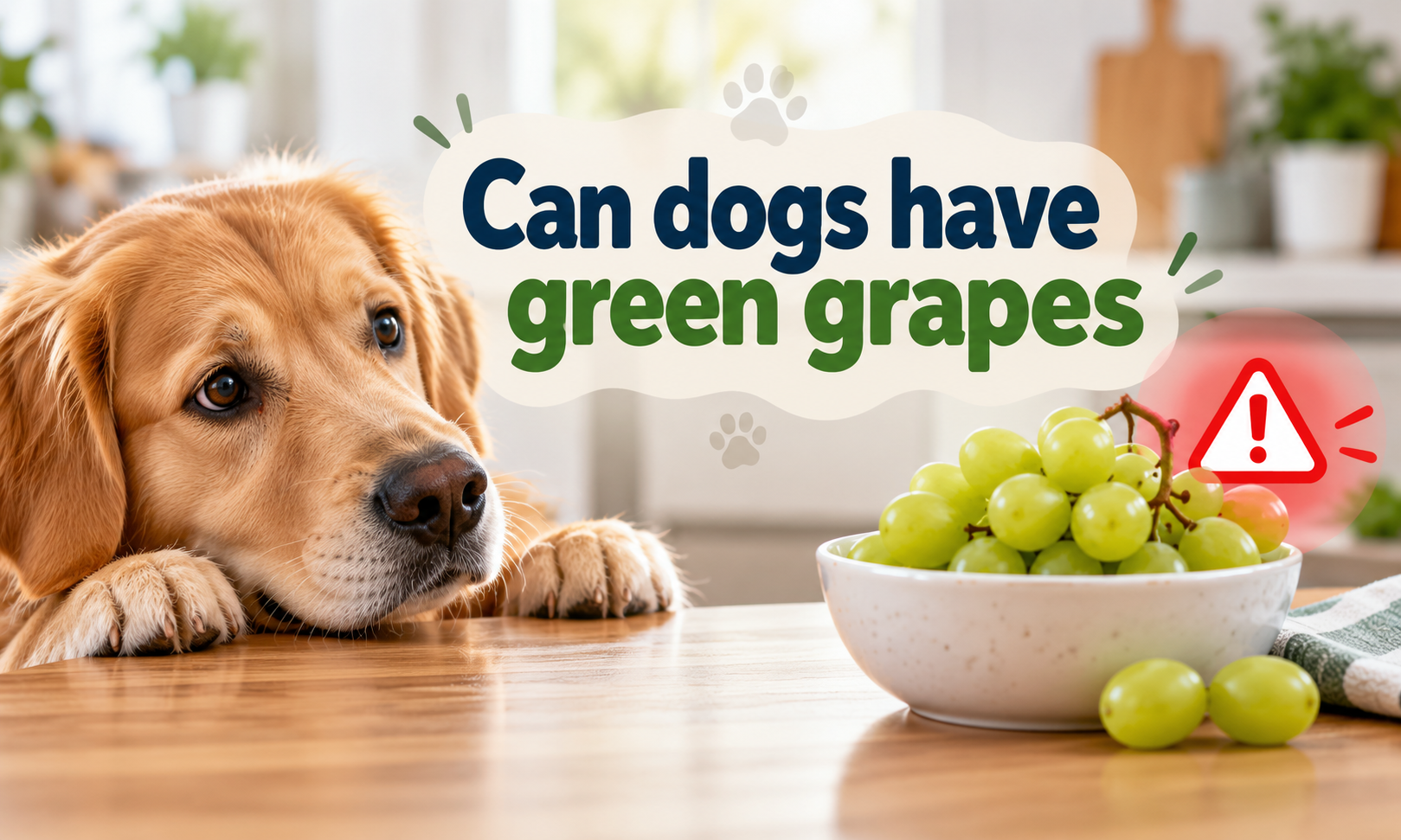
Can dogs have green grapes? No. Green grapes can be toxic to dogs, just like red, purple, seedless, and seeded grapes. Grape poisoning can cause acute kidney injury, and there is no reliable way to predict which dog will become seriously ill after eating them. Because the toxic risk varies from fruit to fruit and dog to dog, veterinarians recommend treating any grape ingestion as potentially important.
The WebMD guide on why dogs cannot eat grapes warns that grapes and raisins can cause sudden kidney failure in dogs. The color of the grape does not make it safer, so green grapes should never be offered as a treat.
Are Green Grapes More or Less Toxic Than Red Grapes?
There is no evidence that green grapes are safer than red or purple varieties. All ordinary table grapes belong to the Vitis group associated with canine grape toxicosis. Seedless grapes are also unsafe.
The toxic effect is unpredictable because the amount of the suspected toxin varies among grapes. That is why a dog may appear fine after one exposure but become ill after another.
Which Grape Products Are Dangerous for Dogs?
| Food | Safe for dogs? | Main concern |
| Green grapes | No | Possible acute kidney injury |
| Red or purple grapes | No | Same grape-toxicity risk |
| Seedless grapes | No | Seeds are not the toxic issue |
| Raisins | No | Concentrated grape product; kidney injury risk |
| Sultanas / dried grapes | No | Same concern as raisins |
| Zante currants | No | Vitis fruit linked to kidney injury |
| Grape juice / jelly | Not a safe treat | May cause GI upset; recipes may contain added sugar or other ingredients |
| Fresh currants from Ribes plants | Different fruit | Not the same as dried Vitis ‘currants’ |
Why Are Grapes Toxic to Dogs?
Veterinary toxicology research now points strongly toward tartaric acid as the likely toxic component in grapes, raisins, and related foods. A 2022 veterinary study connected acute kidney injury from grapes with similar toxicity after dogs ate cream of tartar and tamarinds, which also contain tartaric acid.
Dogs appear unusually sensitive to tartaric acid and related organic acids. The exact concentration varies naturally between grape varieties, growing conditions, and individual fruits, helping explain why toxicity can be difficult to predict.
How Many Green Grapes Are Dangerous for a Dog?
There is no dependable number that can be called completely safe. The risk depends on the dog’s size, the amount eaten, and how much tartaric acid was present in those specific grapes.
The Merck Veterinary Manual’s 2024 toxicology review notes that, in general, more than one grape or raisin per 10 pounds (4.5 kg) of body weight may contain enough tartaric acid to pose a kidney risk. This is a risk estimate, not a safe-dose rule. A veterinarian should be contacted after any known grape ingestion rather than waiting to see whether the dog becomes sick.
Can One Green Grape Hurt a Dog?
A single grape will not poison every dog, but a small exposure cannot be guaranteed safe. Dogs vary in susceptibility, and tartaric acid content varies between individual grapes.
If a small dog eats one grape, or any dog eats an unknown number, call a veterinarian or animal poison service promptly. Early advice is most useful before symptoms develop.
What Symptoms Can Grape Poisoning Cause?
According to Merck Veterinary Manual, many affected dogs develop vomiting or diarrhea within about 6 to 12 hours. Other signs can include lethargy, loss of appetite, abdominal pain, weakness, dehydration, increased thirst, and tremors.
Kidney injury can develop later, often within one to three days. A dog may urinate less than normal or eventually stop producing urine. Once severe anuric kidney failure develops, the prognosis becomes much worse.
What Should You Do if Your Dog Ate Green Grapes?
Contact your veterinarian, an emergency veterinary clinic, or an animal poison-control service immediately. Tell them the dog’s weight, the approximate number of grapes eaten, the time of ingestion, and whether any symptoms are present.
Do not wait for vomiting, lethargy, or changes in urination before asking for help. Early treatment can reduce absorption and allow kidney function to be monitored before severe injury develops.
Should You Make Your Dog Vomit at Home?
Do not use salt, mustard, fingers in the throat, or other home remedies. Whether vomiting should be induced depends on how recently the grapes were eaten, the dog’s condition, and aspiration risk.
Veterinarians have medications specifically used to induce vomiting safely in appropriate dogs. Follow professional instructions rather than improvising at home.
How Do Veterinarians Treat Grape Ingestion?
If the exposure was recent and the dog is still clinically well, a veterinarian may induce vomiting to remove grapes from the stomach. Treatment decisions depend on the amount eaten, the timing, symptoms, and laboratory results.
Dogs with significant exposure may receive intravenous fluids and monitoring of kidney values and urine output. Blood tests can track creatinine and other markers. Treatment is most effective before severe kidney failure develops.
Why Should You Not Wait for Symptoms?
The early stage can look deceptively mild. A dog may vomit once and then appear normal while kidney injury is developing. By the time urine production falls dramatically, treatment is more difficult and prognosis is poorer.
The ASPCA’s pet food-safety guidance identifies grapes and raisins as foods that can cause kidney damage in dogs and supports tartaric acid as the suspected toxic component.
Are Raisins Worse Than Fresh Grapes?
Raisins are especially concerning because they are dried grapes, so a dog can consume the equivalent of many grapes in a small volume. Foods such as raisin bread, trail mix, granola, cereal, cookies, and baked goods can therefore create significant exposure.
Mixed foods may add other hazards as well. For example, trail mix can contain chocolate or macadamia nuts, while baked products may include ingredients that complicate treatment.
What Fruits Can Dogs Eat Instead?
If your dog enjoys fruit, safer options include small pieces of apple without seeds or core, blueberries, strawberries, watermelon without seeds or rind, banana, and pear without seeds. Introduce new foods gradually and keep treats modest.
Fruit is optional for dogs. A complete and balanced dog food should provide the main nutrition, while treats should remain a small portion of daily calories.
How Can You Prevent Accidental Grape Exposure?
- Keep grapes and raisins off low tables, counters, and accessible fruit bowls.
- Teach children not to share grapes or raisins with pets.
- Check trail mix, cereals, breads, and baked goods for raisins before offering scraps.
- Secure lunchboxes and backpacks that may contain grape snacks.
- Clean up dropped grapes immediately, especially in homes with small dogs.
Frequently Asked Questions About Dogs and Green Grapes
Are Seedless Green Grapes Safe for Dogs?
No. Seeds are not the problem. Seedless green grapes can still contain the compounds associated with grape toxicosis and kidney injury.
Are Organic Grapes Safer for Dogs?
No. The concern comes from the grape itself, not pesticides or conventional farming. Organic grapes should also be kept away from dogs.
Can Dogs Eat Frozen Grapes?
No. Freezing does not remove the suspected toxin. Frozen grapes should be treated the same as fresh grapes.
What if My Dog Ate Grapes Before and Was Fine?
Past tolerance does not prove future safety. Toxicity varies between exposures, grapes, and individual dogs. A dog that previously had no symptoms can still become ill after a later ingestion.
What Is the Bottom Line?
Dogs should not eat green grapes. Green, red, purple, seeded, and seedless grapes can all pose a risk of acute kidney injury, and the toxic dose is too unpredictable to justify intentionally feeding even a small amount.
If your dog eats grapes, contact a veterinarian or animal poison service promptly rather than waiting for symptoms. Early veterinary care offers the best chance to prevent or limit serious kidney damage.