
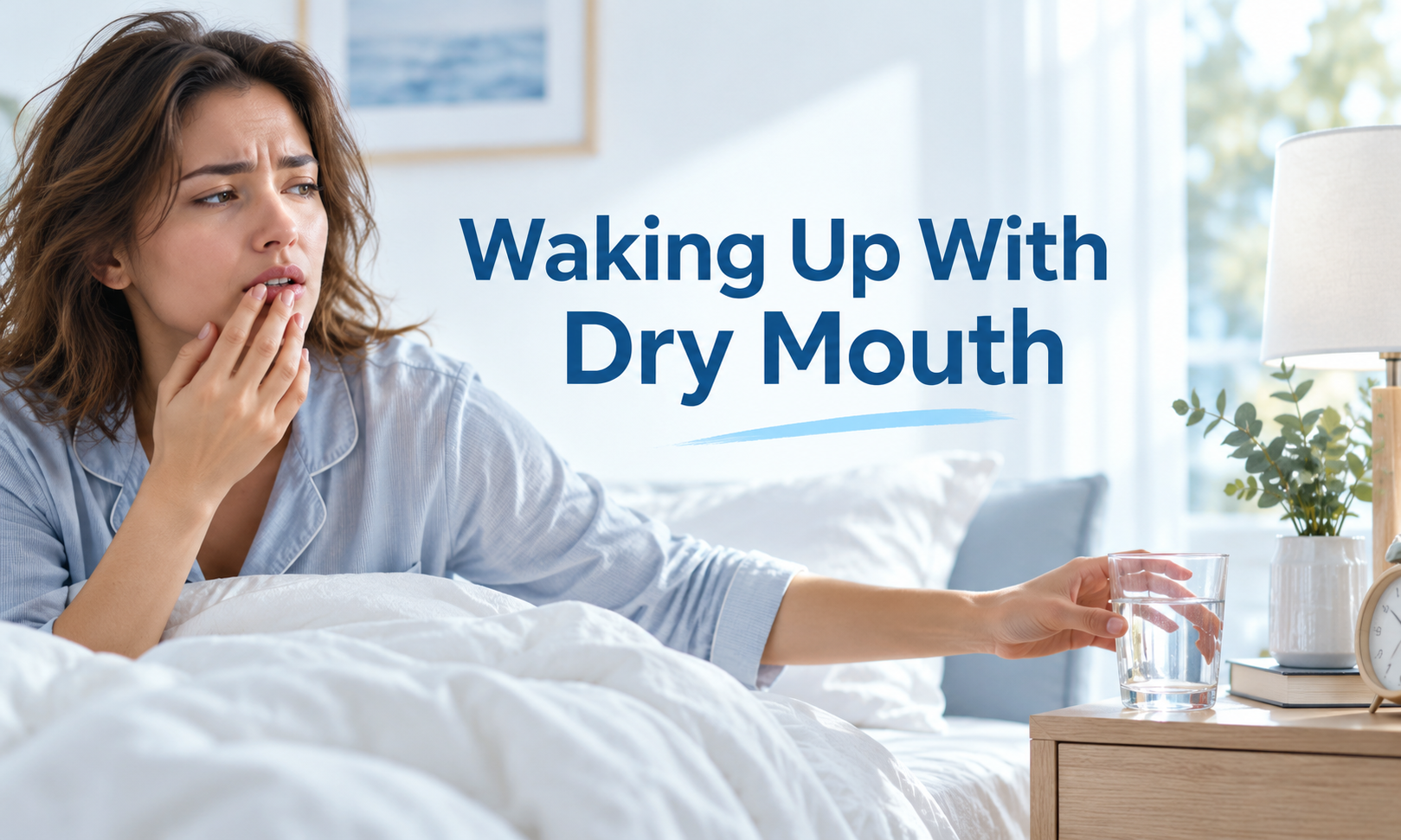
A practical guide to mouth breathing, dehydration, medications, sleep apnea, Sjögren’s disease, diabetes, and dental risks
If you keep waking up with dry mouth, the cause may be as simple as sleeping with your mouth open, but repeated nighttime dryness can also be linked to nasal congestion, snoring, sleep apnea, medications, dehydration, or health conditions that reduce saliva production. The medical term for persistent dry mouth is xerostomia.
Saliva does more than keep the mouth comfortable. It helps with chewing and swallowing, washes away food particles, protects tooth enamel, and limits the growth of harmful microbes. When dry mouth happens night after night, it can increase the risk of cavities, bad breath, mouth sores, and oral infections.
What Are the Most Common Causes of Dry Mouth in the Morning?
| Possible Cause | Typical Clues | What May Help |
| Mouth breathing | Dryness mainly on waking, open-mouth sleep, snoring | Treat nasal blockage, use a humidifier, practice nasal breathing |
| Nasal congestion | Stuffy nose from allergies, cold, sinus problems | Saline rinse or appropriate allergy treatment |
| Medications | Dry mouth started after a new drug or dose change | Review medicines with a doctor or pharmacist |
| Sleep apnea | Loud snoring, gasping, daytime sleepiness, morning headache | Sleep evaluation and treatment if diagnosed |
| Dehydration | Dark urine, thirst, low fluid intake | Improve daytime hydration if medically appropriate |
| Sjögren’s disease or diabetes | Dry mouth during the day too, dry eyes, frequent urination, other symptoms | Medical evaluation |
Can Sleeping With Your Mouth Open Cause Dry Mouth?
Yes. Mouth breathing is one of the most common explanations when dryness is worst in the morning and less noticeable during the day. Air moving continuously over the mouth dries the tissues and speeds moisture loss.
Mouth breathing can happen because of a blocked nose, allergies, a cold, sinus inflammation, a deviated septum, enlarged nasal tissue, or simply a habit. Snoring often occurs at the same time.
Mayo Clinic recommends trying to breathe through the nose rather than the mouth and treating snoring or nasal blockage when they contribute to nighttime dryness.
Can Sleep Apnea Cause Dry Mouth?
Yes. Waking with a dry mouth is a recognized symptom of obstructive sleep apnea, especially when it occurs with loud snoring, witnessed pauses in breathing, gasping during sleep, morning headaches, or excessive daytime sleepiness.
Mayo Clinic lists awakening with a dry mouth among common sleep apnea symptoms.
Dry mouth alone does not diagnose sleep apnea. However, repeated morning dryness plus snoring or daytime sleepiness is a good reason to discuss sleep evaluation with a healthcare professional.
Can Medications Make Your Mouth Dry Overnight?
Yes. Hundreds of prescription and over-the-counter medicines can reduce saliva production. Common categories include some antihistamines, antidepressants, anti-anxiety medicines, blood-pressure drugs, bladder-control medicines, decongestants, and certain pain medicines.
The National Institute of Dental and Craniofacial Research specifically notes that medicines for high blood pressure, depression, and bladder-control problems are frequent causes of dry mouth.
Do not stop a prescribed medicine on your own because of dry mouth. A doctor or pharmacist may be able to adjust the dose, timing, or medication choice if the symptom is significant.
Does Dehydration Cause Morning Dry Mouth?
It can. If you drink very little during the day, exercise heavily, have fever, vomit, have diarrhea, or consume a large amount of alcohol, the mouth may feel especially dry overnight.
A glass of water before bed can help if you are mildly thirsty, but forcing large amounts of fluid at night is not necessary and may interrupt sleep. People with heart failure, kidney disease, or fluid restrictions should follow their clinician’s advice.
Can Diabetes Cause Persistent Dry Mouth?
Yes. Diabetes is one of the health conditions associated with dry mouth. High blood glucose can increase urination and fluid loss, and some people with diabetes also develop reduced salivary flow.
Dry mouth is more concerning when it occurs both day and night and is accompanied by frequent urination, unusual thirst, blurry vision, unexplained weight loss, or fatigue.
These symptoms can have many causes, so they should be evaluated rather than used for self-diagnosis.
What Is the Connection With Sjögren’s Disease?
Sjögren’s disease is an autoimmune condition that can reduce saliva and tear production. Dry mouth and dry eyes are two of its hallmark symptoms.
Other possible symptoms include joint pain, fatigue, swollen salivary glands, difficulty swallowing dry foods, and dental problems related to low saliva.
If dry mouth is persistent throughout the day and you also have significant dry eyes, ask a healthcare professional whether further evaluation is appropriate.
Why Does Chronic Dry Mouth Matter for Your Teeth?
Saliva contains minerals such as calcium and phosphate that help keep teeth strong and helps wash away food and acids.
NIDCR warns that persistent dry mouth increases the risk of tooth decay and oral fungal infections because saliva normally helps keep harmful germs under control.
People with chronic xerostomia may need more frequent dental care, fluoride toothpaste, prescription-strength fluoride in some cases, and products designed to keep the mouth moist.
What Can You Do Tonight to Reduce Dry Mouth?
Keep water nearby and take small sips if you wake up dry. A cool-mist humidifier can add moisture to bedroom air, especially during winter or when heating and air conditioning make the room dry.
Treat nasal congestion when possible so you can breathe through your nose. Saline nasal sprays or rinses can be useful for some people, while persistent allergy or sinus symptoms may need medical treatment.
Avoid tobacco, cannabis smoke, and heavy alcohol use because they can worsen dryness. Caffeine can also make symptoms more noticeable in some people.
During the day, sugar-free gum or sugar-free candy containing xylitol may stimulate saliva. Use products made for dry mouth if needed, such as oral moisturizing gels or saliva substitutes.
Should You Use Mouthwash Before Bed?
Choose carefully. Mouthwashes containing alcohol can worsen dryness and irritation. Alcohol-free fluoride rinses may be more appropriate, especially if cavity prevention is a concern.
Mayo Clinic also recommends avoiding products and foods that worsen dryness and using fluoride toothpaste and appropriate fluoride products when chronic dry mouth increases cavity risk.
When Should You See a Doctor or Dentist?
Get professional advice if dry mouth happens most nights, continues during the day, causes trouble swallowing or speaking, or leads to repeated mouth sores, thrush, bad breath, or new cavities.
A doctor or dentist may review medications, check the mouth and salivary glands, order blood tests, or measure saliva production depending on the suspected cause.
Seek evaluation for possible sleep apnea if dry mouth comes with loud snoring, gasping, witnessed pauses in breathing, morning headaches, or persistent daytime sleepiness.
Frequently Asked Questions
Why is my mouth dry only when I wake up?
Mouth breathing, snoring, nasal congestion, dry bedroom air, or sleep apnea are common explanations when daytime saliva feels normal.
Can drinking more water fix dry mouth?
It can help when mild dehydration is contributing, but it will not correct dry mouth caused by medicines, sleep apnea, Sjögren’s disease, or salivary-gland problems.
Does a humidifier help dry mouth at night?
Yes, it can help reduce moisture loss from the mouth and throat, particularly in dry indoor environments.
Can antihistamines cause dry mouth?
Yes. Many antihistamines reduce saliva and can make nighttime dryness worse.
Is dry mouth a sign of sleep apnea?
It can be one symptom, especially when paired with loud snoring, gasping, breathing pauses, morning headaches, or daytime sleepiness.
Can dry mouth damage teeth?
Yes. Persistent low saliva increases the risk of cavities, gum problems, mouth sores, and fungal infections.
Final Thoughts
Waking up with a dry mouth is often caused by mouth breathing, nasal congestion, snoring, dry air, medications, or mild dehydration. When the dryness also occurs during the day, underlying conditions such as diabetes, Sjögren’s disease, or reduced salivary-gland function become more important to consider.
Simple steps such as improving nasal breathing, using a humidifier, staying appropriately hydrated, avoiding drying substances, and protecting the teeth with good oral care can help. Persistent dry mouth should be evaluated because long-term low saliva can affect both comfort and dental health.
This article is written for a U.S. audience using oral-health and sleep guidance available in October 2026. Persistent xerostomia may require evaluation by a dentist, primary-care clinician, sleep specialist, or other healthcare professional depending on the cause.