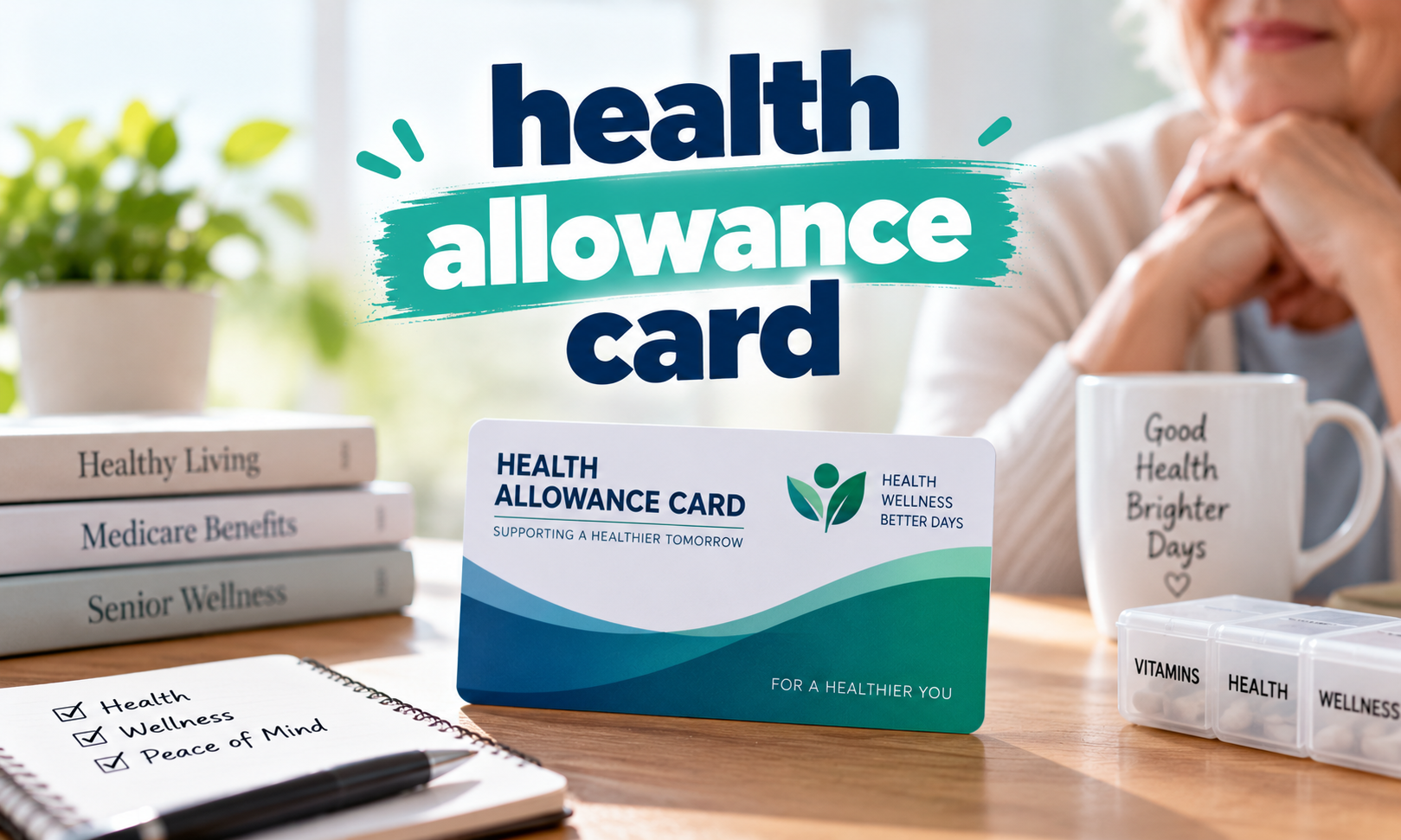
A health allowance card is not a standard card issued by Original Medicare. The phrase is commonly used for prepaid benefit cards offered by some private Medicare Advantage plans to administer supplemental benefits such as over-the-counter items, dental or vision expenses, transportation, and, for certain eligible members, healthy food or utility benefits.
The most important detail is that there is no universal Medicare allowance amount and no single national application for one of these cards. The benefit, dollar amount, eligible purchases, participating stores, funding schedule, and qualification rules are determined by the specific Medicare Advantage plan. Some plans call the benefit a flex card, OTC card, healthy benefits card, spending card, or allowance card.
Because the term is heavily used in advertising, it is also a common source of confusion and scams. A legitimate plan card is tied to actual Medicare Advantage coverage. It is not free cash from the federal government, and an unexpected caller should never need your Medicare number, Social Security number, bank account, or payment information simply to send you a new Medicare card.
What Is a Health Allowance Card?
A health allowance card is usually a prepaid debit-style card that a Medicare Advantage insurer uses to deliver one or more supplemental benefits. The card may be electronically restricted so it works only for plan-approved products or services.
For example, one portion of the card might be available for over-the-counter medicines and health supplies, while another portion could be designated for dental, vision, or hearing expenses. Some plans use the same physical card for several different benefit categories but maintain separate balances behind the scenes.
The name on the card is less important than the Evidence of Coverage, Summary of Benefits, and plan rules that explain what the benefit actually pays for.
Is a Health Allowance Card the Same as a Medicare Flex Card?
Often, yes in everyday advertising, but the terminology is not standardized. Flex card, allowance card, OTC card, healthy benefits card, and spending card can describe similar prepaid benefit tools, yet the actual coverage may be very different.
| Common Term | Who Usually Offers It | Typical Purpose | Important Limitation |
| Health allowance card | Some Medicare Advantage insurers | General label for plan-funded supplemental benefits | Not an official Original Medicare card |
| Flex card | Some Medicare Advantage insurers | May combine several supplemental benefit categories | Covered purchases vary by plan |
| OTC card | Some Medicare Advantage insurers | Over-the-counter health products | May work only at participating retailers or for approved items |
| Healthy food / utility card | Certain Medicare Advantage plans or benefit categories | Food, produce, utilities, or related supports | Often limited to members who meet additional eligibility rules |
| Original Medicare card | Federal Medicare program | Shows Medicare enrollment information | Does not contain a spending allowance |
Does Original Medicare Give Everyone a Spending Card?
No. Original Medicare, which consists of Part A and Part B, does not issue a universal health allowance or flex card with money for groceries, utilities, or everyday expenses.
These benefits are generally associated with private Medicare Advantage plans. To join a Medicare Advantage plan, you generally need both Medicare Part A and Part B and must live in the plan’s service area.
Medicare explains the eligibility and enrollment rules on its official Medicare Advantage plan enrollment page.
Who Qualifies for a Medicare Advantage Allowance Card?
Qualification usually begins with enrollment in a Medicare Advantage plan that actually offers the card. Not every Medicare Advantage plan includes one, and a plan that offers an OTC allowance may not offer food, utility, transportation, or dental spending through the same card.
Some benefits are available to all members enrolled in a particular plan. Other benefits can be limited to people who meet plan-specific health or chronic-condition requirements.
For example, certain non-medical benefits such as healthy food or utility support may be offered as Special Supplemental Benefits for the Chronically Ill. Eligibility can depend on the plan’s criteria and the enrollee’s health status. A television or online ad that says seniors can get a large allowance does not mean every Medicare beneficiary qualifies for that amount.
How Much Money Can Be Loaded on a Health Allowance Card?
There is no federal standard allowance. The amount depends on the plan, location, benefit category, and eligibility rules.
A plan might fund an OTC benefit monthly, quarterly, or annually. Another plan might provide separate amounts for dental, vision, hearing, transportation, or food-related benefits. The amount can change from one plan year to the next even if the insurance company and card name remain the same.
This is why advertisements promising a specific dollar figure should be treated as marketing, not as a guarantee. The number that matters is the amount shown in the official plan documents for your ZIP code and eligibility category.
What Can You Buy With a Health Allowance Card?
Eligible purchases depend entirely on the benefit attached to the card. Common categories can include over-the-counter medicines, first-aid items, health monitoring supplies, dental expenses, vision expenses, hearing services, transportation, and other plan-approved health-related items.
Some qualifying members may also receive benefits for healthy foods, utilities, or other supports. These broader benefits are not automatically available to every person in the plan.
| Possible Benefit Category | Examples That May Be Covered | Questions to Ask the Plan |
| OTC products | Pain relievers, bandages, first-aid items, certain health supplies | Which exact products and retailers are approved? |
| Dental | Copays or plan-covered dental services | Does the card pay providers directly or reimburse me? |
| Vision | Eyeglasses, contacts, or related plan-covered costs | Is there a network or annual limit? |
| Hearing | Hearing aids or related covered services | Which models or providers qualify? |
| Transportation | Plan-approved rides to medical care | Do rides require advance scheduling or authorization? |
| Healthy foods | Eligible groceries or produce for qualifying members | Who qualifies and which foods are excluded? |
| Utilities | Certain plan-approved household utility expenses for qualifying members | Which bills qualify and how is payment submitted? |
Can You Use the Card Like Cash?
Usually not. A legitimate Medicare Advantage benefit card is typically restricted to covered products or services. It is not the same as a bank debit card with unrestricted cash.
The card may decline a transaction if the product is not eligible, the retailer is not participating, the purchase exceeds the available balance, or the wrong benefit wallet is being used.
CMS has continued tightening rules around Medicare Advantage debit cards. For 2027, CMS finalized requirements that supplemental-benefit debit cards be electronically linked to covered items and services in real time and limited to the specific plan year. Those changes are designed to make card use more transparent and reduce misuse.
The current policy direction is summarized in the CMS 2027 Medicare Advantage and Part D final rule fact sheet.
Do Unused Health Allowance Funds Roll Over?
Sometimes, but you should never assume they do. Many supplemental benefit balances reset monthly, quarterly, or at the end of the plan year.
Some plans may allow limited rollover within the year or between funding periods, while others use a strict use-it-or-lose-it approach. The expiration rule can also differ by benefit category on the same card.
Check the plan portal, card app, customer-service number, or Evidence of Coverage before delaying a purchase you already know is eligible.
How Do You Apply for a Health Allowance Card?
You generally do not apply for a federal card by itself. Instead, you enroll in a Medicare Advantage plan that includes the benefit and then follow the plan’s activation or enrollment process.
A practical sequence is to confirm that you have Medicare Part A and Part B, compare Medicare Advantage plans available in your area, review each plan’s supplemental benefits, check whether the allowance requires extra eligibility, and enroll during a valid Medicare enrollment period.
After coverage begins, the plan may automatically mail the card, ask you to activate it online or by phone, or require an additional benefit enrollment step.
When Can You Enroll in a Medicare Advantage Plan?
Medicare has specific enrollment periods. The annual Open Enrollment Period runs from October 15 through December 7. Changes made during that period generally take effect January 1 of the following year.
If you are already enrolled in Medicare Advantage, the Medicare Advantage Open Enrollment Period runs from January 1 through March 31. During that period, you can generally switch to another Medicare Advantage plan or return to Original Medicare.
Initial Enrollment and Special Enrollment Periods may also apply depending on when you first become eligible or whether you experience a qualifying life event.
As of October 8, 2026, the next annual Medicare Open Enrollment Period begins October 15, 2026 and runs through December 7, 2026 for coverage changes effective January 1, 2027.
How Should You Compare Plans That Advertise Allowance Cards?
Do not choose a Medicare Advantage plan based only on the advertised allowance. A card that sounds generous can be a poor trade if the plan has a narrow doctor network, higher drug costs, inconvenient prior-authorization rules, or higher out-of-pocket exposure for services you use frequently.
Start with your doctors, hospitals, medications, pharmacies, premiums, maximum out-of-pocket limit, and expected healthcare needs. Then evaluate supplemental benefits such as dental, vision, hearing, fitness, OTC allowances, food benefits, or utility support.
A smaller allowance in a plan that covers your doctors and medications well can be worth far more than a larger card attached to coverage that does not fit your healthcare needs.
| What to Compare | Why It Matters | Where to Verify It |
| Doctor and hospital network | Out-of-network care may cost more or not be covered | Plan directory and provider confirmation |
| Prescription coverage | Drug tiers and preferred pharmacies can change annual costs | Plan formulary and Medicare Plan Compare |
| Allowance amount | Marketing may highlight only the maximum value | Official Summary of Benefits |
| Eligibility restrictions | Food or utility benefits may require additional qualification | Evidence of Coverage and plan representative |
| Spending restrictions | Card may work only for eligible items and merchants | Benefit catalog or card portal |
| Expiration / rollover | Unused funds may disappear | Plan benefit rules |
| Maximum out-of-pocket cost | Major medical spending can outweigh an allowance | Plan cost-sharing documents |
Can You Get a Health Allowance Card With Original Medicare Plus Medigap?
Generally, the prepaid supplemental-benefit cards discussed in Medicare advertising are associated with Medicare Advantage, not Original Medicare plus a Medigap policy.
Medigap helps pay certain out-of-pocket costs left by Original Medicare. It is a different type of coverage from Medicare Advantage and does not function as a plan-funded grocery or OTC allowance program.
If keeping broad Original Medicare provider access is a priority, do not switch coverage merely to obtain a card without comparing the full medical and drug coverage consequences.
Are Grocery and Utility Allowances Available to Everyone?
No. This is one of the most misunderstood parts of health allowance advertising.
Some Medicare Advantage plans can offer food, produce, utilities, or other non-medical supports to qualifying chronically ill enrollees under special supplemental benefit rules. The plan can have specific eligibility criteria tied to health status.
That means a plan advertisement may be accurate that the benefit exists, but a particular member may not qualify for it. Always ask whether the advertised dollar amount applies to every member of the plan or only to a subgroup.
How Do You Check Your Card Balance and Eligible Purchases?
Most plans provide one or more ways to check the balance: an online member portal, a mobile app, an automated phone number, or a customer-service representative.
The same tools may show approved retailers and product categories. If a purchase is unexpectedly declined, contact the plan rather than repeatedly trying different merchants.
Keep receipts for purchases, especially if the plan allows reimbursement when a card system fails or when a covered item is purchased through an approved alternative process.
What Are the Biggest Health Allowance Card Scam Red Flags?
Scammers know that words such as Medicare, flex card, food allowance, grocery card, and senior benefits attract attention. They may use official-looking websites, social-media ads, robocalls, text messages, or caller ID that appears to come from Medicare.
Be suspicious if someone unexpectedly asks for your Medicare number, Social Security number, bank account, credit card number, or payment in order to send a new Medicare card or unlock benefits.
The FTC’s 2026 Medicare and health-insurance scam guidance recommends going directly to Medicare.gov or calling 1-800-MEDICARE rather than trusting phone numbers or links in unsolicited messages.
A real Medicare card is free. Medicare does not unexpectedly call, text, email, or message you on social media to sell you something or demand payment for a new card.
What Should You Do If Someone Calls Offering a Large Medicare Allowance?
Do not provide personal information during the incoming call. Write down the company name if you want, end the call, and independently look up the official number for your current plan or contact Medicare directly.
If the caller says you need to switch plans immediately to receive the allowance, remember that legitimate Medicare Advantage enrollment is governed by enrollment periods and documented plan benefits.
If you believe someone has used or stolen your Medicare number, contact Medicare and review your Medicare Summary Notices or online claims for services you do not recognize.
Can an Allowance Card Affect Other Benefits?
The interaction between a plan-funded allowance and other public benefits can be complicated, especially when programs use income or resource tests.
Do not assume that a benefit will or will not count for programs such as Supplemental Security Income, housing assistance, Medicaid, or other means-tested benefits. Rules can depend on the program and how the Medicare Advantage benefit is structured.
If you receive means-tested assistance, ask the agency that administers that benefit or a qualified benefits counselor before relying on general statements from an insurance salesperson.
How Can SHIP Help You Compare Allowance Cards?
State Health Insurance Assistance Programs, commonly called SHIP, provide free Medicare counseling. A SHIP counselor can help you compare Medicare Advantage options without selling a plan.
This can be especially useful when two plans advertise similar allowance cards but have different provider networks, drug coverage, cost sharing, or supplemental-benefit restrictions.
Free independent counseling is often more valuable than relying only on a television ad, online lead form, or sales call.
Frequently Asked Questions About Health Allowance Cards
Is a health allowance card really from Medicare?
Usually the card itself is issued by a private Medicare Advantage insurer, not Original Medicare. The plan is Medicare-approved, but the federal government does not give every beneficiary a universal spending card.
How much can I get on a Medicare allowance card?
There is no standard amount. Funding varies by plan, ZIP code, benefit type, eligibility, and plan year. Always verify the amount in official plan documents.
Can I use a Medicare flex card for groceries?
Some plans allow eligible members to use certain supplemental benefits for healthy food or groceries, but this is not available to everyone. Additional health-related eligibility rules may apply.
Can I use a health allowance card for utilities?
Some qualifying Medicare Advantage members may receive utility-related supplemental benefits. The specific bills, limits, and eligibility rules are determined by the plan.
Does Original Medicare offer a flex card?
No. The commonly advertised flex or allowance cards are associated with certain private Medicare Advantage plans, not Original Medicare Parts A and B by themselves.
How do I apply for a flex or health allowance card?
Compare Medicare Advantage plans in your area, confirm that the plan offers the benefit, verify any additional eligibility requirements, enroll during an allowed enrollment period, and then follow the insurer’s activation process.
Do unused funds roll over?
It depends on the plan and benefit. Some balances expire monthly, quarterly, or at year-end. Do not assume unused funds carry forward.
How can I tell if a health allowance offer is a scam?
Be suspicious of unsolicited calls or messages asking for your Medicare, Social Security, bank, or credit card information. Verify benefits through Medicare.gov, 1-800-MEDICARE, your plan’s official contact information, or SHIP.
Final Thoughts
A health allowance card can be a useful Medicare Advantage benefit, but it should be understood as part of an insurance plan rather than as free federal cash. The amount, spending categories, eligibility rules, retailers, and expiration dates all depend on the specific plan.
When comparing plans, put doctors, hospitals, prescriptions, premiums, cost sharing, and maximum out-of-pocket costs ahead of the headline value of a card. Then examine the supplemental benefit to see whether you actually qualify and whether the spending rules match expenses you would otherwise pay yourself.
And treat unexpected calls promising large Medicare allowances with caution. Verify the offer through Medicare.gov, 1-800-MEDICARE, your insurer’s official contact information, or a local SHIP counselor before sharing personal information or changing coverage.
This article is written for a U.S. audience using Medicare, CMS, and FTC information available in October 2026. Medicare Advantage benefits, eligibility rules, plan availability, and allowance amounts can change by plan year and location. Always verify current coverage in official plan documents.